 Sinhala
  English
  Chinese
  Czech
Czech  German
  French
  Hebrew
  Hindi
Hindi  Italian
  Japanese
  Korean
  Malayalam
  Portuguese
  Spanish
  Swedish
  Swahili
  Tamil
Tamil  Ukrainian




The Carbon Garden: A Living Model for Climate Resilience and Mitigation at Kew Gardens
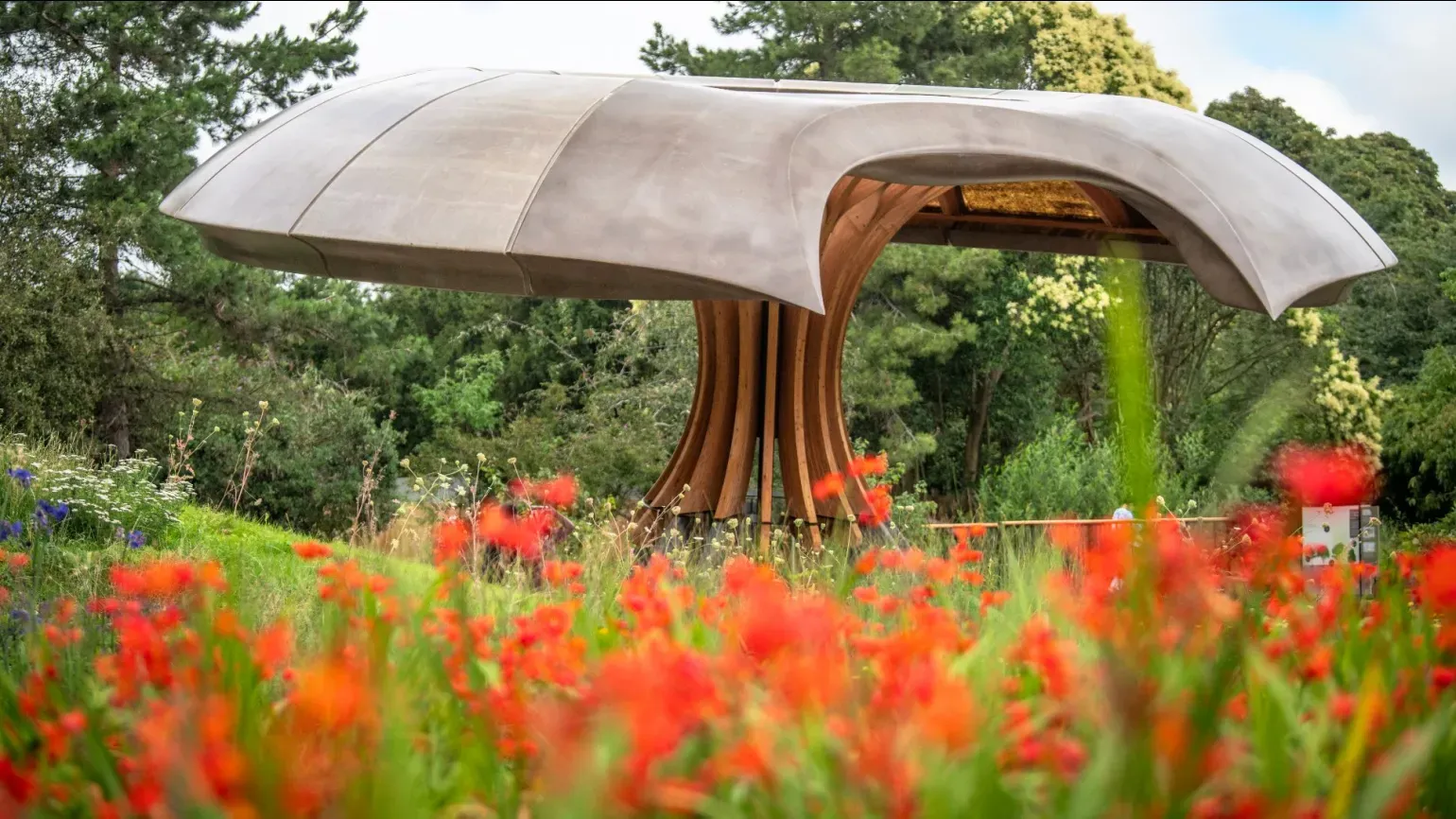
The Carbon Garden at the Royal Botanic Gardens, Kew, is an innovative landscape that transforms complex climate science into a living, immersive experience, demonstrating how plants, design, and biodiversity can help build resilience in the face of climate change. Read on to learn more about this dynamic example of a landscape that doubles as a climate education platform.
About the Royal Botanic Gardens, Kew
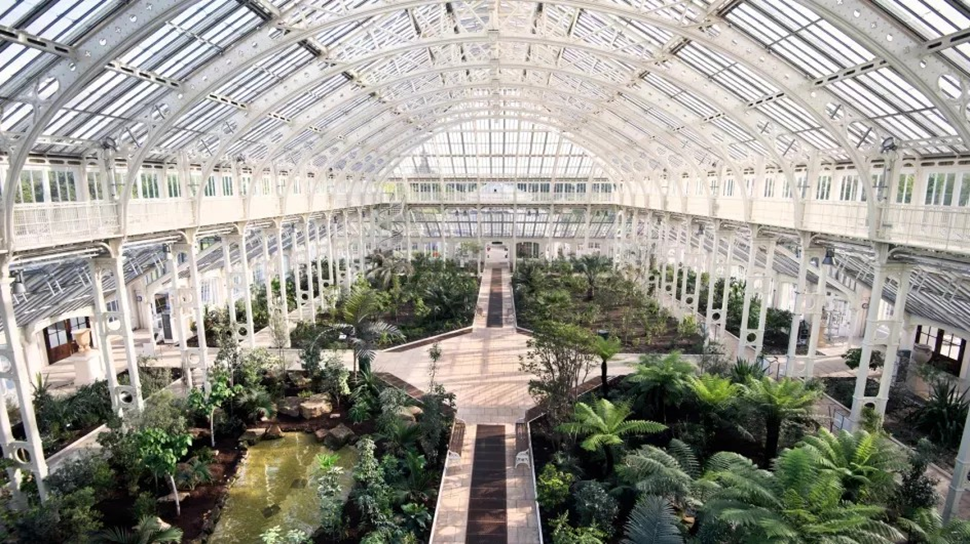
Kew Gardens is a 320-acre site of historic, landscaped gardens located in London, United Kingdom. Founded in 1759, Kew has since become a world-renowned center for scientific research, horticulture, and conservation. It is also a designated UNESCO World Heritage Site. Each year, more than 2.5 million people visit both Kew Gardens and Wakehurst — RBG Kew’s wild botanic garden in Sussex, which houses the world’s largest wild plant seed bank.
Championing Biodiversity and a Sustainable Future
RBG Kew’s mission is to create a thriving planet for all, powered by plants and fungi. With over 600 science staff and 150 horticulturists collaborating with institutions worldwide, Kew sits at the intersection of biodiversity, climate change, and sustainable development. Its pioneering research explores how plants and fungi contribute to carbon capture and climate resilience.
Building on this work, RBG Kew unveiled one of its most ambitious projects to date on July 25, 2025: the Carbon Garden.
Purpose of the Carbon Garden
The Carbon Garden was created to reveal the critical role carbon plays in sustaining life on Earth from the growth of plants and fungi to the health and future of humanity. It also explores the scale of the climate crisis and demonstrates how certain plants can help combat it by storing carbon.
Spanning more than four years in development, the Carbon Garden features over 6,500 plants and 35 newly planted trees. These species were carefully selected for both their carbon absorption potential and their resilience to projected future climate conditions.
Visual Storytelling and Natural Infrastructure
At the heart of the Carbon Garden lies a powerful blend of design, symbolism, and scientific storytelling, using visual interpretation to welcome its visitors. A distinctive visual highlight is a planting scheme inspired by the climate stripes visualization created by Professor Ed Hawkins at the University of Reading. Each stripe corresponds to the average temperature of a single year from 1961 to 2020—shades of blue for cooler years and red for hotter ones.
Kew brings this concept to life through a vibrant arrangement of herbaceous perennials and flowering plants. Such as Achillea ‘Moonshine,’ ‘Paprika,’ and ‘Red Velvet,’ alongside Hydrangea serrata ‘Bluebird’, visually mapping the intensifying heat of the changing climate. By translating scientific data into a physical, sensory experience, the garden makes abstract climate concepts more tangible.
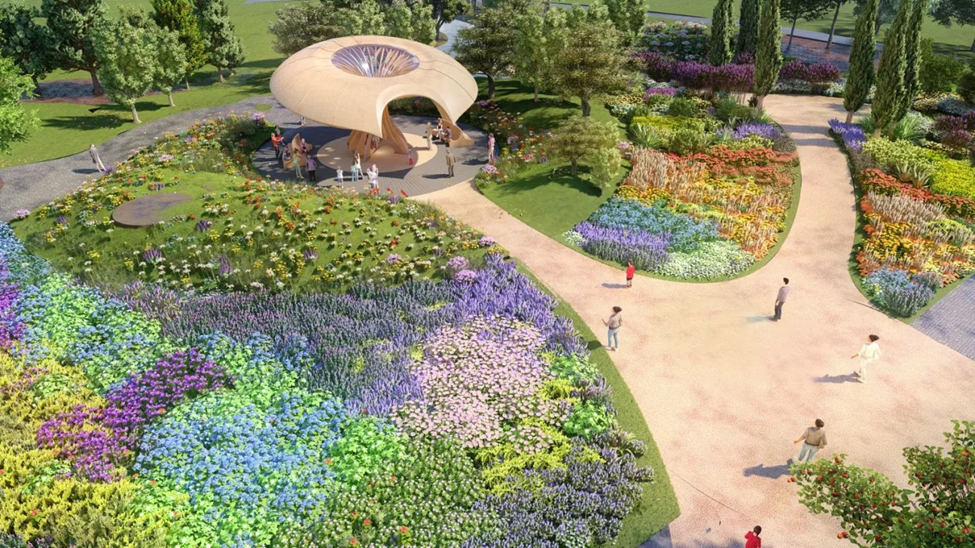
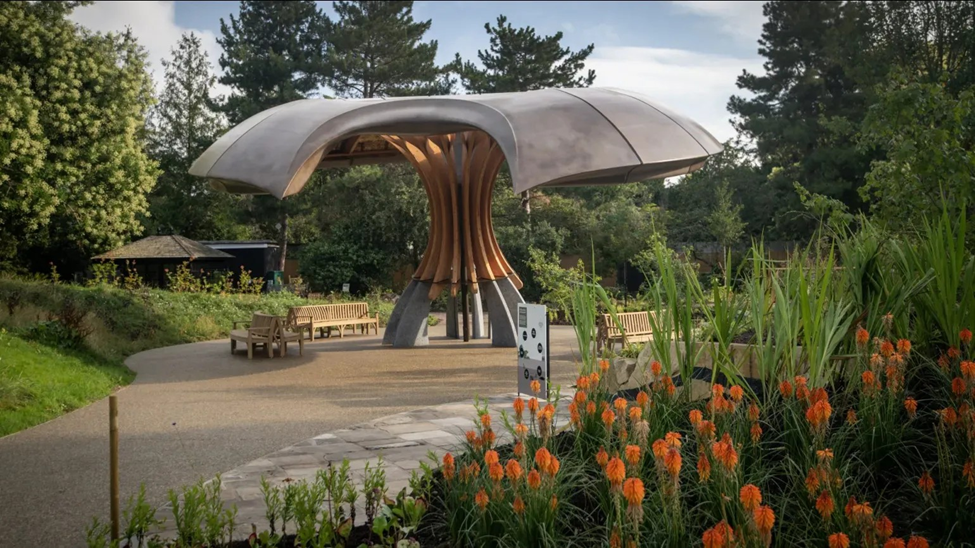
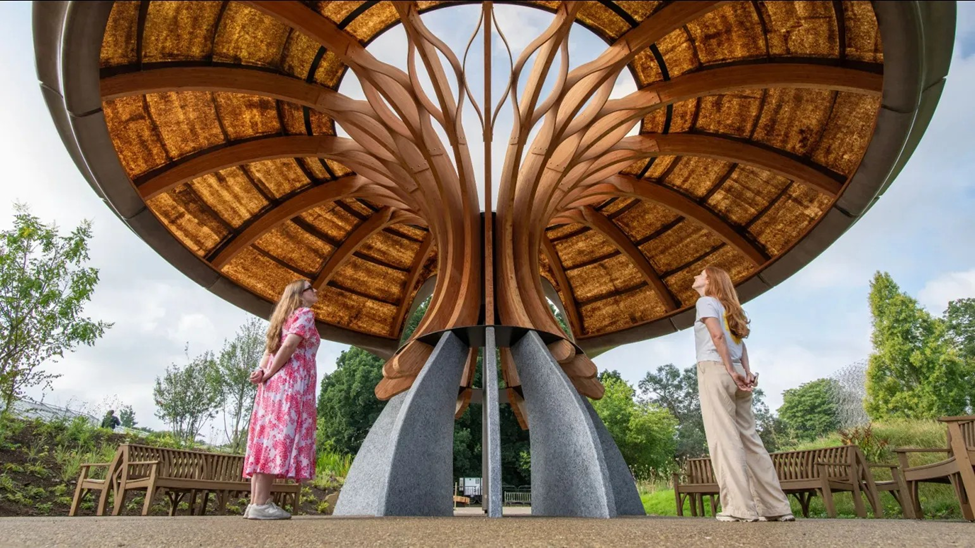
Complementing the visual storytelling in the landscape design is a stunning architectural pavilion that celebrates the symbiotic relationship between plants and fungi. Designed to reflect natural forms and biological processes, the structure is built from natural materials and shaped to resemble a fruiting fungal body. The exterior form also serves functional purposes, channeling rainwater into an adjacent rain garden. The pavilion also offers a shaded, welcoming space for school visits and community programs, reinforcing Kew’s commitment to public education and engagement.
Regenerative Horticultural Design of the Carbon Garden
Exploring the relationship between carbon emissions and climate change, RBG Kew communicates these complex ideas through innovative garden design, including a rain garden, a dry garden, grasslands and wildflower meadows.
The rain garden, designed alongside a bioswale system, demonstrates how planting design can be integrated into landscape to support sustainable water management and carbon storage. The design helps reduce flooding, prevent soil erosion, and recharge groundwater through moisture-tolerant plants that stabilize the soil and sequester carbon. This approach shows how natural resources can be managed sustainably.
Diverse ecosystems contribute significantly to carbon sequestration. More diverse habitats are more resilient and efficient at storing carbon than monocultures. To support this, RBG Kew has incorporated grasslands, wildflower meadows, and native hedgerows into the Carbon Garden to boost biodiversity and ecological health. Looking at climate resilience from another angle, the dry garden demonstrates how planting strategies can support climate adaptation. Featuring drought-tolerant and species such as Parry’s agave (Agave parryi) and lavender, this section highlights plants that may become common in London gardens over the next 30 years, projecting how climate change could shift regional plant communities.
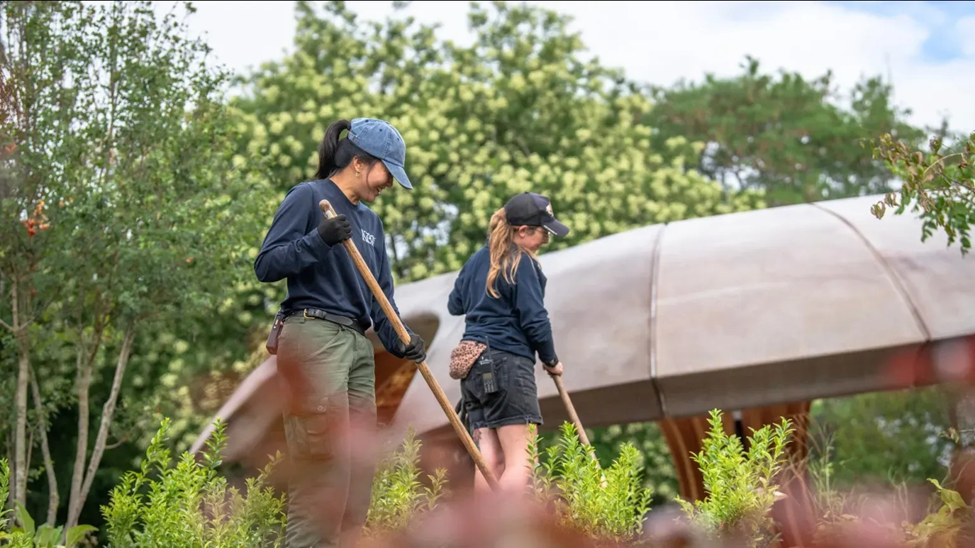
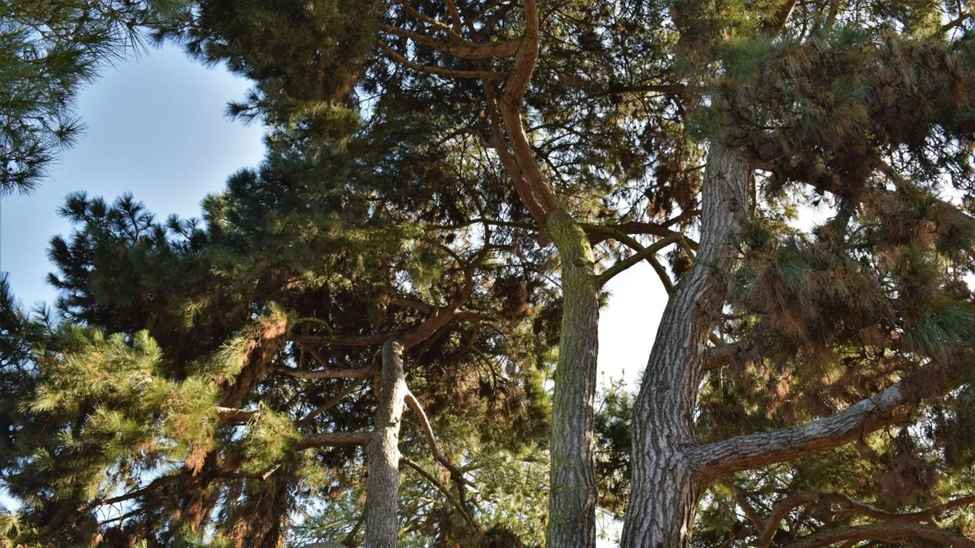
In addition to smaller plantings, trees are vitally important tools when considering how to create resilient landscapes for people and the planet. 35 trees have been chosen based on models developed by Kew’s Head of Tree Collections for their resilience and ability to thrive in projected climate-conditions. Beyond their beauty, these trees offer a range of ecosystem services: absorbing carbon dioxide, producing oxygen, providing shade and shelter, and improving air quality by filtering pollutants, and crucially, will thrive for decades to come.
Climate-Resilient Planting for a Sustainable Future
As environmental conditions and climate patterns shift at an unprecedented pace, it has become increasingly urgent for botanic gardens to work proactively with the evolving conditions of our ecosystems and planet.
RBG Kew’s Planting for the Future report, published in 2024, offers one of the most comprehensive landscape succession plans in the world, remarkable for both the breadth and diversity of its plant collection. The report serves as a blueprint that encourages public, private, and botanical gardens across the UK and internationally to diversify beyond traditional native-only planting approaches.
Climate Action in Botanic Gardens Worldwide
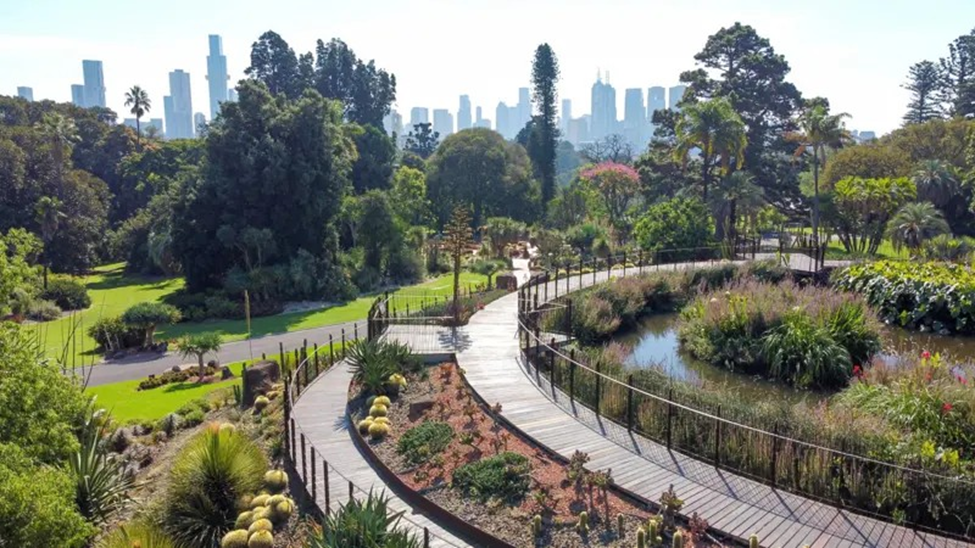
Other botanic gardens around the world are also recognizing the urgency of climate resilience. Notable examples include the Royal Botanic Gardens Victoria in Melbourne, Australia, and the Kruckeberg Botanic Garden in Washington, U.S.
Royal Botanic Gardens Victoria is a member of the Climate Change Alliance of Botanic Gardens (CCABG) and has contributed key resources such as the Climate Assessment Tool (CAT) and the Landscape Succession Toolkit. Both are freely available and widely encouraged to use—not only by botanic gardens but also by landscape designers, academic institutions, and municipal planners.
CAT analyzes current species distributions and climate data alongside future climate projections to generate suitability scores for species selection. The Landscape Succession Toolkit offers a comprehensive guide to help gardens manage plant collections, species selection, and adaptive landscape planning in anticipation of climate risks.
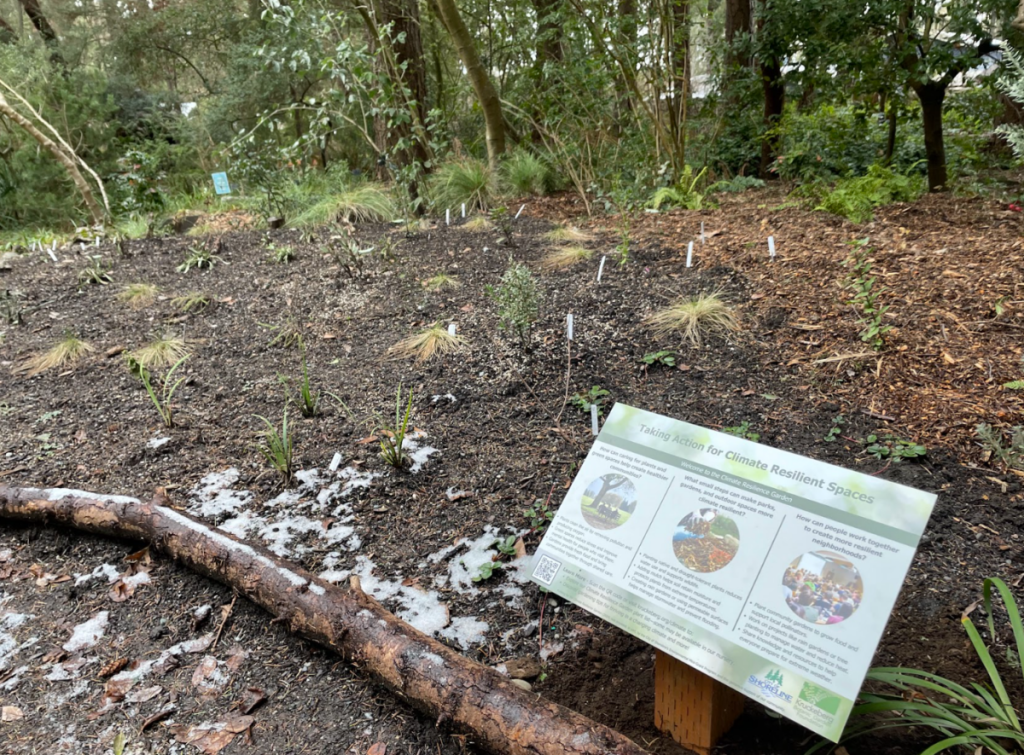
Kruckeberg Botanic Garden has also taken meaningful steps by creating the Climate Resilience Garden (CRG)—a space that functions as both an educational and practical resource for sustainable gardening. Featuring over 700 plants, including native and climate-adaptive exotic species, the garden implements climate-resilient landscaping techniques and integrates soil health strategies. Interpretive signage throughout the space helps visitors learn how to apply these principles in their own gardens, making CRG a model for community-focused climate education.
Rethinking Our Relationship to the Natural World
RBG Kew’s Carbon Garden is an effective model that merges sustainability, design, and public engagement. By making complex climate science tangible and emotionally resonant, it invites visitors to rethink their relationship with the natural world. As climate pressures mount, the lessons embedded in this garden—on species resilience, conservation strategies, and adaptive land management—are relevant far beyond botanic institutions. From urban planners to suburban gardeners, everyone has a role to play in building climate-resilient landscapes.
Further Reading
Read more about Kew’s Carbon Garden:
Read more about “Planting for the Future” Report:


ප්රතිචාරයක් ලබාදෙන්න