 French
  English
  Chinese
  Czech
Czech  German
  Hebrew
  Hindi
Hindi  Italian
  Japanese
  Korean
  Malayalam
  Portuguese
  Sinhala
  Spanish
  Swedish
  Swahili
  Tamil
Tamil  Ukrainian




California Academy of Sciences: Regenerating the Natural World Through Science, Learning, and Collaboration
Mission: Regeneration
The California Academy of Sciences is a leading multidisciplinary institution that integrates an aquarium, planetarium, rainforest, and natural history museum within a single campus in San Francisco’s Golden Gate Park. Through the combination of world-class scientific biodiversity research and interactive public experiences, The Academy improves the public understanding and commitment to regenerating the natural world.
In 2008, The Academy opened to the public in its current location. Conceived as a physical manifestation of the institution’s mission, the building embodies a commitment to regenerating the natural world through science, learning, and collaboration. Its innovative architectural design and operational strategies emphasize environmental responsibility at every scale. As a result, The Academy received dual LEED Platinum certifications from the U.S. Green Building Council, distinguishing it as the world’s first Double Platinum museum and the largest Double Platinum certified building globally.
The architecture of The Academy is distinguished by three integrated principles. First, sustainability was embedded from the project’s inception: materials from the original building were carefully salvaged and reused during demolition and reconstruction, minimizing waste and environmental impact. Second, the building’s design prioritizes energy efficiency, substantially reducing its carbon footprint while conserving natural resources across the facility. Third, these sustainable design strategies extend beyond architecture into daily operations, informing efficient and environmentally responsible practices that shape how The Academy functions over time.
Sustainable Materials and Responsible Construction
More than 90% of demolition materials from The Academy’s twelve former buildings were diverted from landfills through extensive recycling and reuse strategies. Sand excavated from the original foundations was repurposed for dune restoration projects across San Francisco, steel was recycled through Schnitzer Steel, and concrete was reused in roadway construction in Richmond.
By extending material life cycles through intentional reuse and restorative construction practices, the project significantly reduced construction waste and conserved raw resources. These strategies also generated tangible benefits for the surrounding community and regional ecosystems, reinforcing The Academy’s commitment to environmental stewardship beyond the site itself.
In addition to minimizing waste, this approach substantially lowered the project’s carbon footprint by reducing the need for material extraction, manufacturing, and long-distance transportation.
Equally important was the careful selection of new building materials based on both performance and environmental impact. Recycled denim insulation was used for its superior thermal retention and sound absorption compared to conventional fiberglass or foam insulation, while also posing fewer health risks. By diverting post-consumer textiles from landfills and delivering equal or better performance, this choice reflects a holistic design approach that integrates human health, material reuse, and long-term sustainability.
Several material decisions that directly reduce or prevent carbon emissions. Concrete used throughout the museum incorporated 15% fly ash, a recycled byproduct of coal combustion, and 35% slag, a waste product from metal extraction. Approximately 95% of the building’s steel was sourced from recycled materials, while 35% of the lumber came from sustainably managed forests. At least 20% of building materials were locally sourced or manufactured within 500 miles of The Academy, reducing transportation-related emissions while supporting the regional economy.
Designing for Energy Efficiency and a Lower Carbon Footprint
The Academy enhances the visitor experience by seamlessly integrating energy-efficient systems with expressive architectural design, creating a self-sustaining ecosystem that supports both building operations and surrounding habitats. Central to this approach is the regeneration of the human–nature connection, a core focus of the California Academy of Sciences’ mission.
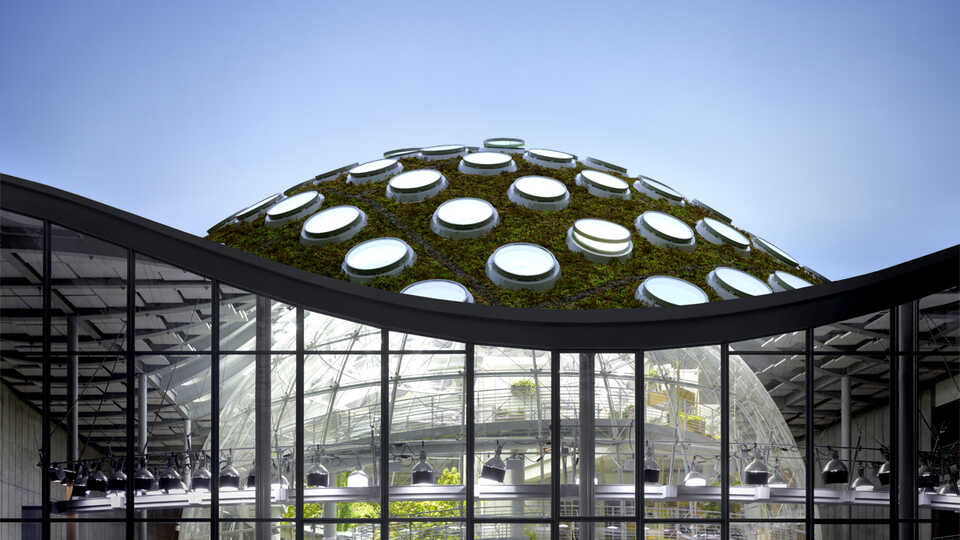
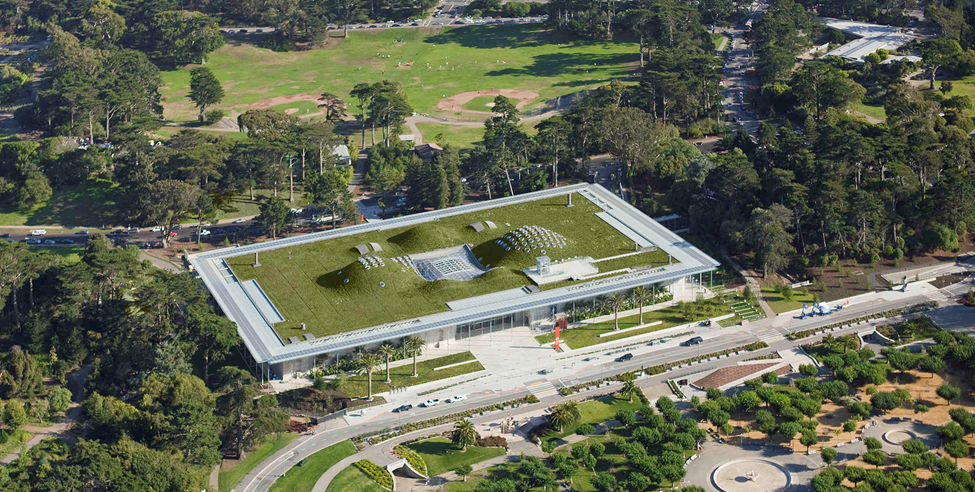
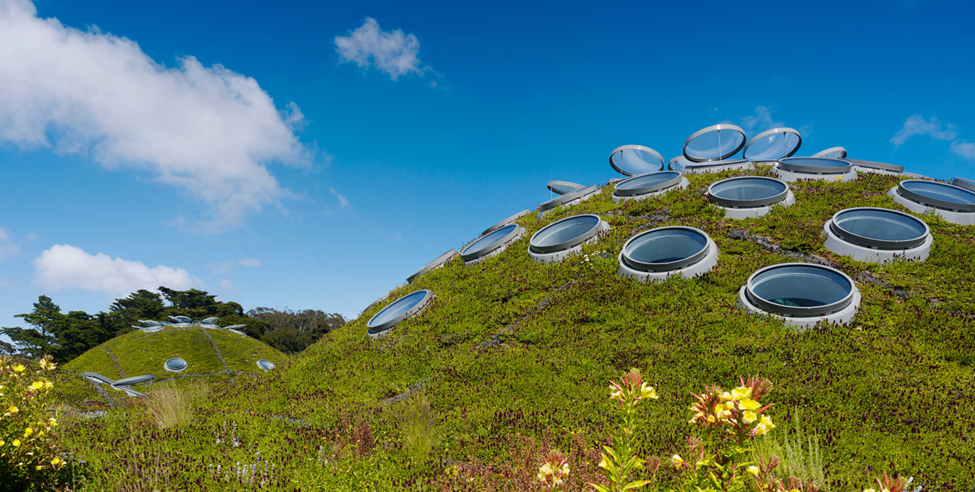
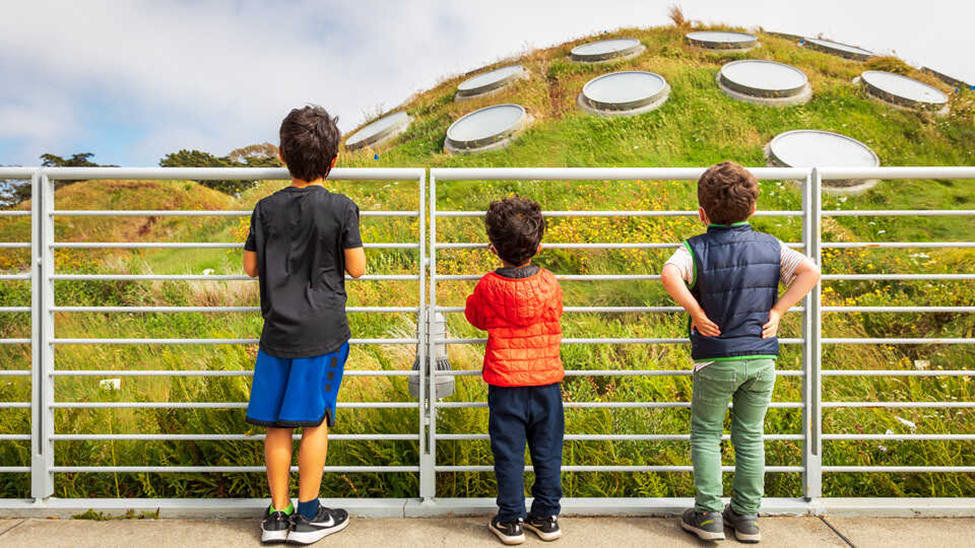
One of the building’s most iconic features is its Living Roof. The roof is planted with approximately 1.7 million native plants, forming a thriving habitat for local birds, butterflies, and insects. Six inches of soil substrate function as a natural insulation, capturing 100% of excess stormwater, helping to prevent pollutants from entering local waterways.
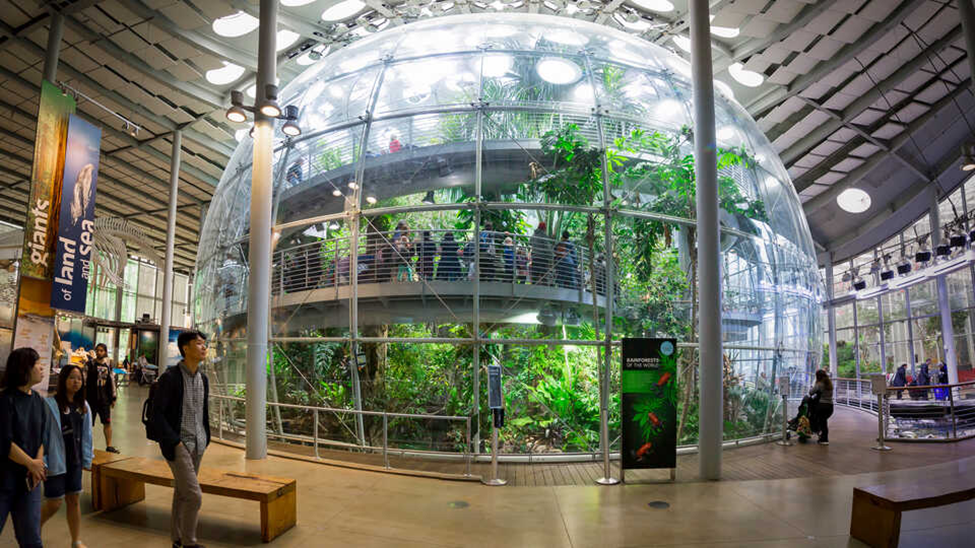
The on-site weather stations monitor wind, rain, and temperature, which enables the building’s automated systems to respond in real time. Circular skylights further enhance performance by delivering natural daylight to the rainforest and aquarium below, and automatically open and close to regulate interior temperatures.
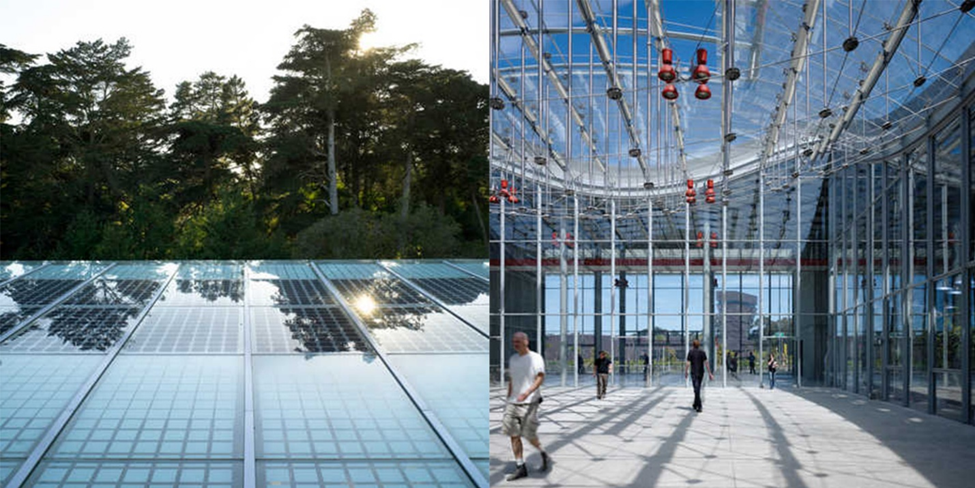
Nearly 90% of regularly occupied spaces at The Academy have access to natural daylight. This helps to reduce reliance on artificial lighting and optimize the use of natural resources. Floor-to-ceiling glazing is engineered for high performance, limiting heat gain, and minimizing the energy required for cooling.
Air circulation further supports thermal regulation throughout the building. An automated ventilation system takes advantage of the natural air currents of Golden Gate Park to moderate interior temperatures. The operable louvers on all four sides of The Academy open and close throughout the day, drawing in fresh air and providing cooling. All these thoughtful and strategic ideas reduce the dependence on conventional HVAC systems and chemical-based cooling methods.
The building utilizes a radiant floor heating where hot water circulates through tubes embedded in the concrete slab. This system directly warms the spaces visitors occupy, improving thermal comfort while reducing the waste of energy associated with conventional forced-air heating, where warm air rises to ceiling levels beyond the occupied zone.
A solar canopy, installed around the perimeter of the Living Roof, generates clean energy. This supplies at least 5 percent of The Academy’s baseline energy demand and prevents the release of more than 405,000 pounds of greenhouse gas emissions annually. Moreover, energy recycling strategies are integrated throughout the building’s operations. For example, sensor-activated faucets in the restrooms generate electricity during use, as flowing water powers an internal turbine that recharges the system’s batteries. Furthermore, a heat recovery system captures and repurposes waste heat produced by HVAC equipment, thereby reducing overall heating energy consumption
Building Systems That Enable Long-Term Operational Efficiency
The Academy demonstrates excellence not only in the design of its sustainable facility but also in its broader operational practices. These institutional strategies align with the focus areas of the Climate Toolkit:
Transport
Approximately 70% of staff members receive incentives to commute via alternative transportation modes, including public transit, cycling, and walking. To further support low-carbon mobility, The Academy provides bicycle parking facilities and electric vehicle charging stations. These measures reduce transportation-related emissions while fostering a culture of sustainable commuting.
Waste Management
Between 60% and 65% of The Academy’s total waste stream is diverted from landfills through recycling and composting programs, including waste generated by approximately 1.5 million visitors annually. Within administrative operations, all printer paper is sourced from 100% post-consumer recycled content. The Academy utilizes green-seal certified cleaning products and custodial paper goods containing recycled materials. This reduces the environmental impact of daily operations.
Research and Engagement
The Living Roof serves as an active site for weekly public programs, citizen science initiatives, and research projects conducted by high school and university students. Through these activities, the roof functions not only as a sustainable design feature but also as a platform for applied learning and scientific inquiry.
In addition, the Education Division provides curriculum materials and professional development workshops for teachers, with a focus on residential energy use, green building practices worldwide, classroom energy audits, and the ecological performance of the Living Roof.
The California Academy of Sciences illustrates how museums can function as both sustainable infrastructures and influential civic institutions. Beyond its energy-efficient architecture and responsible operations, The Academy advances climate awareness through research, public engagement, and evidence-based advocacy. By embracing innovation, integrity, and the courage to confront urgent climate challenges, The Academy further demonstrates how cultural institutions can lead in shaping informed public discourse and fostering resilient, socially and ecologically thriving communities.
——————————————————————————————————–
Ressources :
Green Building & Operations – California Academy of Sciences
Purpose Built: The California Academy of Sciences
Choosing Sustainable Building Materials for the Academy
Issue: Environmental Sustainability and Museums – American Alliance of Museums
Green Building & Operations – California Academy of Sciences


Laisser un commentaire