 Spanish
  English
  Chinese
  Czech
Czech  German
  French
  Hebrew
  Hindi
Hindi  Italian
  Japanese
  Korean
  Malayalam
  Portuguese
  Sinhala
  Swedish
  Swahili
  Tamil
Tamil  Ukrainian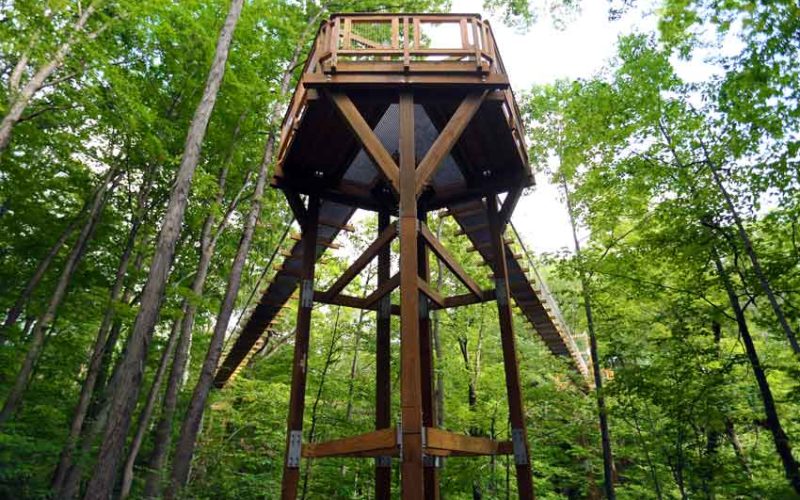
en colaboración con




9500 Sperry Road
Kirtland, OH 44094
 Recursos
¿Qué situaciones e iniciativas singulares ha emprendido o piensa emprender para hacer frente al cambio climático que no se hayan recogido en nuestra encuesta inicial?
Holden Forests and Gardens consta de dos campus, el urbano Cleveland Botanical Garden y el exurbano Holden Arboretum. El Holden Arboretum tiene 3.000 acres de zonas naturales, incluidos 2.000 acres de bosque. Nuestro proyecto de bosques en funcionamiento pretende demostrar una gestión forestal sostenible mediante la cual los propietarios puedan obtener ingresos a la vez que gestionan sus tierras para aumentar la biodiversidad y mitigar el cambio climático (por ejemplo, aumentando las tasas de crecimiento de los árboles, manteniendo los restos leñosos dentro del bosque). Este proyecto combina la investigación con la divulgación educativa y nos permite aumentar la capacidad de nuestros bosques para secuestrar carbono.
¿Cuáles son los problemas u oportunidades más acuciantes de su comunidad que pueden aprovecharse para hacer frente al cambio climático?
Un problema acuciante es el posible aumento de las temperaturas en las zonas urbanas y la intensificación del "efecto isla de calor" con el cambio climático. Como defensores de la plantación de árboles en entornos urbanos y construidos, nuestro trabajo puede aumentar la resistencia al cambio climático en nuestras comunidades.
¿Qué características únicas de su jardín pueden aprovecharse para hacer frente al cambio climático?
Como ya se ha señalado, las extensas zonas naturales de Holden sirven tanto de laboratorio como de método mediante el cual Holden puede aprender, educar y mitigar los efectos del cambio climático.
Teach facts and best practices to mitigate and reduce global climate change.
In FY23, our primary focus was on establishing recycling programs at both campuses. These campuses are now equipped to recycle everyday items, including glass. Composting initiatives have also seen significant growth with the introduction of the new composting area at ARB. We are actively exploring the potential for implementing food composting at ARB in collaboration with Rust Belt Riders.
In FY23, we identified Green Corps Interns as a key audience for climate education, equipping them with factual knowledge and practical strategies to reduce environmental impact. Interns applied this learning through hands-on sustainability actions, including ink-recycling initiatives that modeled waste-reduction best practices. Building on this approach in FY24, we hired a dedicated Green Corps intern to lead a food waste reduction initiative, focused on educating school groups about the climate impacts of food waste and implementing best practices to reduce lunch waste sent to landfills. Together, these efforts positioned interns as informed climate stewards who actively apply and share solutions that mitigate global climate change.
Additionally, to achieve this goal, we initially attempted to arrange a multi-day workshop for educators focused on climate change. Regrettably, the workshop was canceled due to low registration. Nevertheless, we adopted a new approach. In collaboration, our Education and Research departments hired a Teacher-in-Residence in the summer of FY24. This Teacher in Residence developed teacher-led lessons and educational materials on climate change and its mitigation. Lessons and other resources are available on our website for educators to download.
Eliminate all single-use plastic in food service, horticulture, gift shops, and all other facilities and operations.
We devoted significant efforts to pursue this objective, recognizing that eliminating single-use plastics may not always be feasible without viable alternatives. We have successfully addressed single-use options in both campuses’ food services by transitioning vending machines and water offerings to cans or self-serve stations. Our Horticulture department is actively experimenting with non-plastic alternatives for pots and other single-use plastic products. Moreover, our gift shops are switching suppliers to favor non-plastic packaging materials. In all other facets of our departments and operations, we diligently seek alternatives to single-use plastics wherever practical.
In addition, in FY24, the Sustainability Committee launched the Employee Single-Use Plastic Challenge to engage staff in reducing or eliminating single-use plastics across departments, events, projects, and programs at Holden Forests & Gardens. Through team-based planning and implementation, the challenge increased organizational awareness of the impacts of single-use plastic and prompted departments to more intentionally evaluate and adjust everyday practices. Results emphasized reduced reliance on disposable plastics, cross-team learning, and increased adoption of alternative practices, reinforcing a culture of mindful consumption and collective climate action.

Presentado por
Conservatorio y Jardín Botánico Phipps
Traducción automática

¿Le ayuda la traducción? ¿Es exacta?
Queremos conocer su opinión.
Póngase en contacto con nosotros si tiene preguntas o comentarios.