 Czech
Czech  English
  Chinese
  German
  French
  Hebrew
  Hindi
Hindi  Italian
  Japanese
  Korean
  Malayalam
  Portuguese
  Sinhala
  Spanish
  Swedish
  Swahili
  Tamil
Tamil  Ukrainian




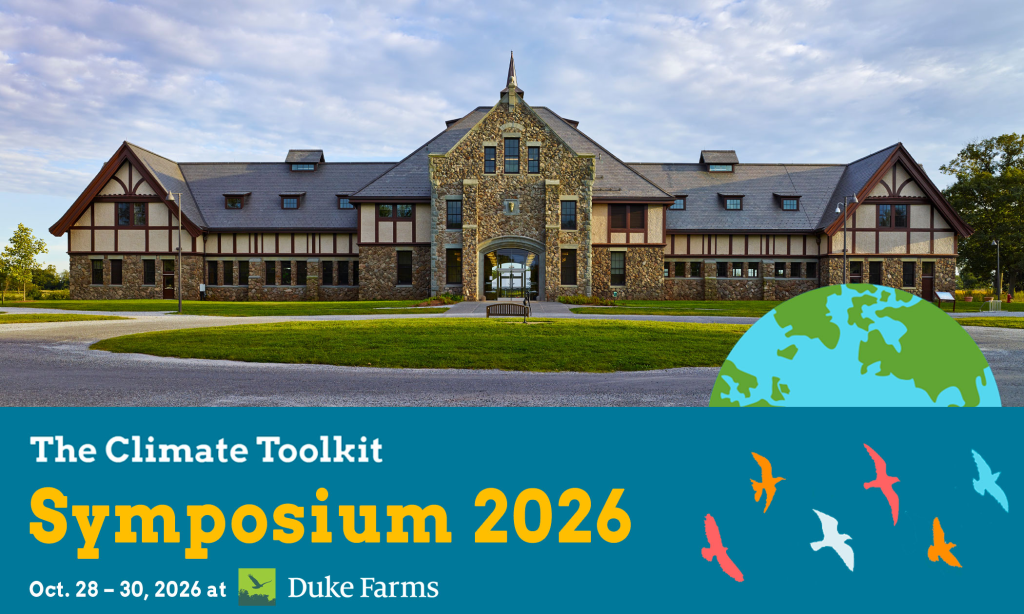
Climate Toolkit Symposium 2026 Agenda
FEATURING SPEAKERS FROM
Botanical Garden of the Piedmont · CambridgeSeven · Central Park Conservancy · Cincinnati Zoo & Botanical Garden · Duke Farms · Environment & Culture Partners · Getty · Green Jay Strategies · Historic New England · LENS · MASS MoCA · Missouri Botanical Garden · Phipps Conservatory and Botanical Gardens · Reykjavik Art Museum · Seneca Park Zoo · South Ken ZEN+ · Taft Museum of Art · The Charles H. Wright Museum of African American History · The Henry Ford · The Mariners’ Museum & Park · The Wild Center · Visual Thinking Strategies Institute
Wednesday, October 28
Opening Reception and Keynote: Visualizing the Future
5 – 8 p.m.
The symposium begins with opening remarks, welcome dinner, and a keynote address by Elizabeth Bagley, Ph.D., Managing Director of Project Drawdown, sharing a vision for what becomes possible when climate action succeeds, setting the stage for the conversations and collaboration ahead.
- Opening Remarks: Margaret Waldock, Executive Director of Farmy Duke, and Richard V. Piacentini, President and CEO of Phippsova konzervatoř a botanická zahrada
- Keynote Address: Elizabeth Bagley, Ph.D., Managing Director of Čerpání projektu
Thursday, October 29
Snídaně
8 – 9 a.m.
Enjoy breakfast and connect with fellow attendees before the day’s sessions begin.
Plenary: Regenerative Thinking
9 – 10:30 a.m.
Explore how regenerative thinking can help climate leaders reconnect with purpose, move beyond burnout, and build more resilient approaches to their work.
- Richard V. Piacentini, President and CEO – Phippsova konzervatoř a botanická zahrada
- Sonja Bochart, Associate Principal – Shepley Bulfinch
Breakout
10:45 a.m. – noon
- Climate Education Programs
Discover practical approaches for connecting educators and developing engaging, effective climate education programs.- Katherine Golden, Senior Manager, Sustainability Initiatives – Botanická zahrada Missouri
- Maggie McCoy, Climate Change Education Coordinator – Botanická zahrada Missouri
- Bruce Gatling-Austin, Educational Coordinator – Botanická zahrada v Piemontu
- Leadership and Change
Examine how leaders at every level can make climate action an institutional priority and navigate both top-down and bottom-up change.- Rebekah Beaulieu, Louise Taft Semple President and CEO – Taft Museum of Art
- Joie Grandbois, Director of Sustainability – Historická Nová Anglie
- Deb Reid, Curator of Agriculture and the Environment – The Henry Ford
- Community Partnerships and Relationships
Explore how partnerships among cultural organizations, artists, governments, and communities can expand the reach and impact of climate action.- Elise Foster Vander Elst, Head of Exhibitions and Environmental Impact Lead – The Design Museum
- Tiva Montalbano, South Ken ZEN+ Program Manager – South Ken Culture Quarter
Oběd
Noon – 1 p.m.
Continue the conversation with fellow attendees over lunch.
Plenary: Funding Climate Action
1 – 2 p.m.
Learn how organizations can approach fundraising, capacity building, financial planning, and capital investment to advance sustainability goals.
- Andy Schlatter, Director of Facilities and Campus Planning – MASS MoCA
- Pamela Reed Sanchez, President & CEO – Seneca Park Zoo
- Sarah Sutton, Co-Founder and CEO – Životní prostředí a kultura Partneři
- Stephanie Shapiro, Co-Founder and Managing Director – Životní prostředí a kultura Partneři
Breakout
2:15 – 3:30 p.m.
- Youth Climate Action and Advocacy
Explore creative approaches that help young people participate in climate conversations, advocacy, and meaningful action.- Ariana Katrin Katrinardottir, Education Project Manager – Reykjavik Art Museum
- Runar Orn Marinosson, Museum Educator – Reykjavik Art Museum
- Jennifer Torrance, Youth Climate Advocacy Committee – Phipps Conservatory & Botanical Gardens
- Climate Storytelling for Visitor Engagement
Learn how compelling stories can make climate issues more accessible, relevant, and actionable for visitors and communities.- Lisa Hardaway, Managing Partner – Green Jay Strategies
- Nora Schnure, Deputy Executive Director, Personnel and Programs – Farmy Duke
- Preeti Desai, Director of Communications – Jersey City Birds
- Elizabeth Sorrell, Co-Founding Partner – Green Jay Strategies
- Ecological Restoration
Examine ambitious restoration and reforestation efforts and how institutions can align ecological restoration with broader climate and biodiversity goals.- Steve Bopp, Studio Director for Planning – Central Park Conservancy
- Jacob Fiss-Hobart, Project Manager – Central Park Conservancy
Plenary: Living Systems at Duke Farms
3:30 – 5 p.m.
Experience Duke Farms’ climate work through guided tracks focused on restoring natural systems, demonstrating climate solutions, and engaging communities.
- Track One: Restore
- Track Two: Demonstrate
- Track Three: Engage
Optional Cocktail Hour
5 – 6 p.m.
Relax with fellow attendees and continue the day’s conversations in an informal setting.
Friday, October 30
Snídaně
8 – 9 a.m.
Gather for breakfast before the symposium’s final day of programming.
Plenary: Buildings, Energy, and Decarbonization
9 – 10:30 a.m.
Explore how cultural institutions are reducing building emissions through retrofits, new construction, renewable energy, and long-term capital planning.
- Megan O’Keefe, Director of Sustainability – Cincinnati Zoo and Botanical Garden
- Mallory Geresy, Sustainability Manager – Cincinnati Zoo and Botanical Garden
- Sabrina Jones, Senior Director of Advancement – The Mariners’ Museum and Park
Breakout
10:45 a.m. – noon
- Electrification Strategies
Learn how organizations at different stages of electrification can assess their needs, build a roadmap, and manage the transition away from fossil fuels.- Jon Wagar, Deputy Executive Director, Operations and Sustainability – Farmy Duke
- Jim Hanson, Sustainability and Technology Manager – Farmy Duke
- Jamie Riker, Motor Pool Coordinator – Farmy Duke
- Visitor Experience: Tools for Engagement
Explore participatory tools that use observation, inquiry, and climate data to strengthen visitor learning and engagement.- Tara Geer, Program Director – Visual Thinking Strategies Institute
- Kerri Ziemann, Program Director – Divoké centrum
- Sustainable Exhibits and Resource Management
Examine practical approaches for reducing the environmental impacts of exhibitions, materials, and institutional resource use.- Camille Kirk, Head of Sustainability – Getty
- Leslie Tom, Chief Sustainability Officer – The Charles H. Wright Museum of African American History
- Douglas Flandro, Associate, Director of Sustainability – CambridgeSeven
Final Share-Out and Reflection
Noon – 12:30 p.m.
Reflect on key ideas from the symposium and identify insights, connections, and actions to carry forward.
Oběd
12:30 – 2 p.m.
Close out the formal program over lunch with fellow attendees.
Optional Peer Time and Duke Farms Exploration
2 – 3 p.m.
Continue conversations with peers or take a deeper look at selected restoration, landscape, and building projects at Duke Farms.
Your $350 admission ticket includes full symposium admission and all food and beverages. Final registration deadline is Fri., Oct. 23!
Máte otázky? Kontakt alampl@phipps.conservatory.org nebo volejte 412-622-6915, ext. 6752

